

HVAF Coating
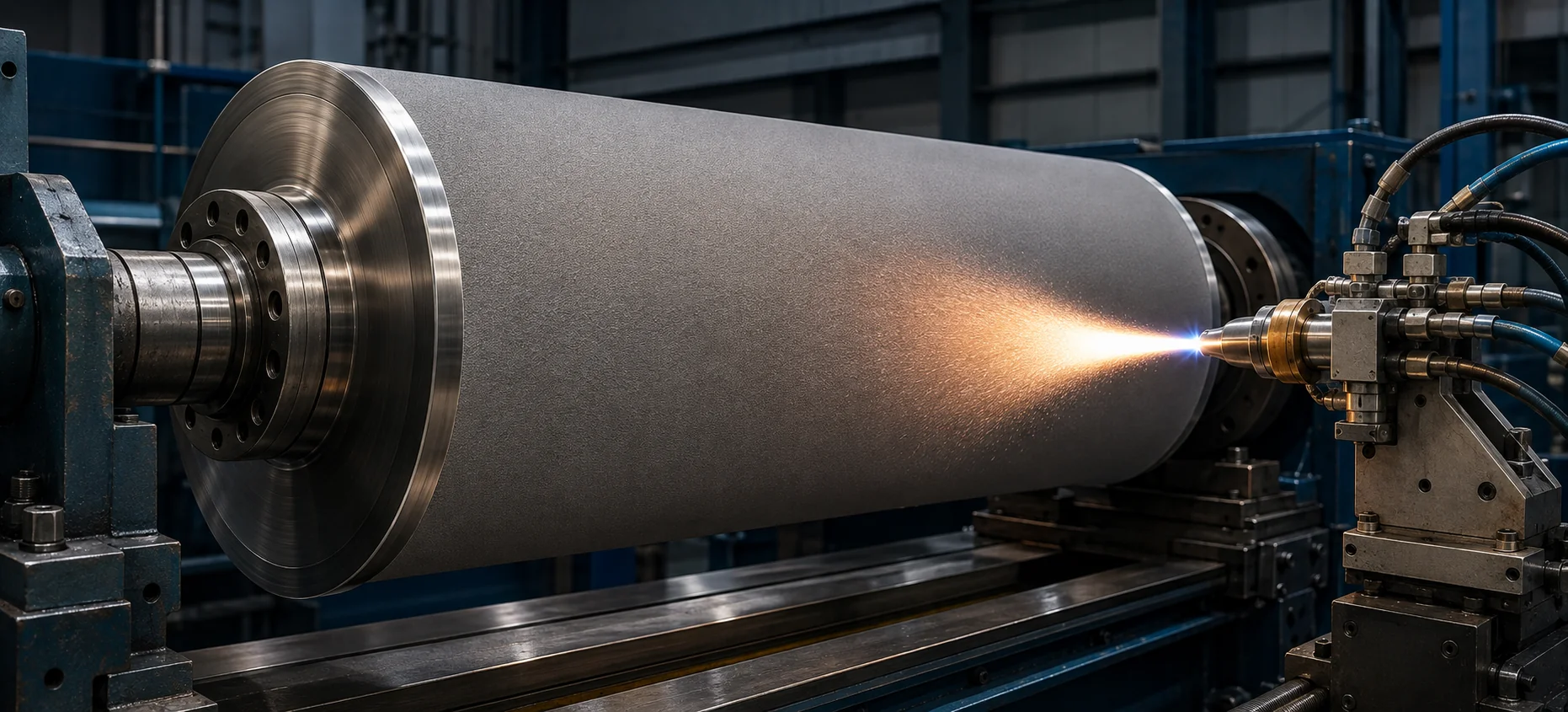
HVAF (High Velocity Air Fuel) is an advanced thermal spray process that produces exceptionally dense, low-oxide carbide coatings by combining supersonic particle velocity with a lower flame temperature than HVOF — ideal where oxidation control and maximum coating integrity matter most.
Key Benefits
Lower Flame Temperature
HVAF operates at roughly 1,900°C compared to HVOF's ~3,000°C, significantly reducing thermal degradation of the coating powder during spraying.
Supersonic Particle Velocity
Compressed air and fuel combustion accelerate particles to supersonic speeds, producing extremely dense coatings with minimal porosity.
Low Oxide Content
The lower spray temperature limits oxidation and decarburization, preserving the carbide phase and corrosion resistance of the coating.
Superior Carbide Retention
Reduced heat input means less breakdown of tungsten carbide particles, retaining more of the base material's original hardness and wear resistance.
Smooth As-Sprayed Finish
The dense, uniform deposit typically requires less post-spray grinding to reach final surface finish specifications.
ISO 9001:2015 Certified
Every coating job is carried out under our certified quality management system, with 40+ years of thermal spray experience behind it.
Materials
| Property | Typical HVAF Value |
|---|---|
| Coating hardness (WC-Co-Cr) | 1,200 – 1,400 HV |
| Porosity | Below 0.5% |
| Bond strength | Above 80 MPa |
| Typical coating thickness | 100 – 400 microns |
| Common materials | WC-Co, WC-Co-Cr, WC-Ni, Tribaloy |
Our Process
1. Surface Preparation
Components are cleaned and grit-blasted to achieve the surface profile needed for strong mechanical bonding of the coating.
2. HVAF Spraying
Compressed air and fuel combustion accelerate the coating powder to supersonic velocity, depositing a dense, low-oxide layer on the component surface.
3. Precision Finishing
Coated components are ground and polished to the specified dimensional tolerance and surface finish.
4. Quality Inspection
Coating thickness, hardness, and bond quality are verified before the component is released for dispatch.
Frequently Asked Questions
What is HVAF coating?
HVAF (High Velocity Air Fuel) is a thermal spray process that uses compressed air and fuel combustion to accelerate coating powder to supersonic velocity at a comparatively low flame temperature, producing dense, low-oxide coatings.
How is HVAF different from HVOF?
HVAF uses compressed air instead of oxygen and operates at a lower flame temperature (~1,900°C vs ~3,000°C for HVOF), which reduces oxidation and carbide decarburization while still achieving very high particle velocities.
What materials can be applied using HVAF?
HVAF is most commonly used for tungsten carbide-based coatings such as WC-Co and WC-Co-Cr, as well as select cobalt-based alloys, where low oxide content and maximum hardness retention are priorities.
What industries use HVAF coatings?
HVAF coatings are used across industries such as oil & gas, aerospace, steel, and power generation, particularly for components requiring high wear and corrosion resistance with minimal porosity, such as hydraulic rods, pump shafts, and valve components.
Areas Served
Ready to discuss your HVAF coating requirement?
Request a Callback +91 9820718722