

HVOF Coating Advantages and Key Considerations: What Engineers Should Know Before Specifying
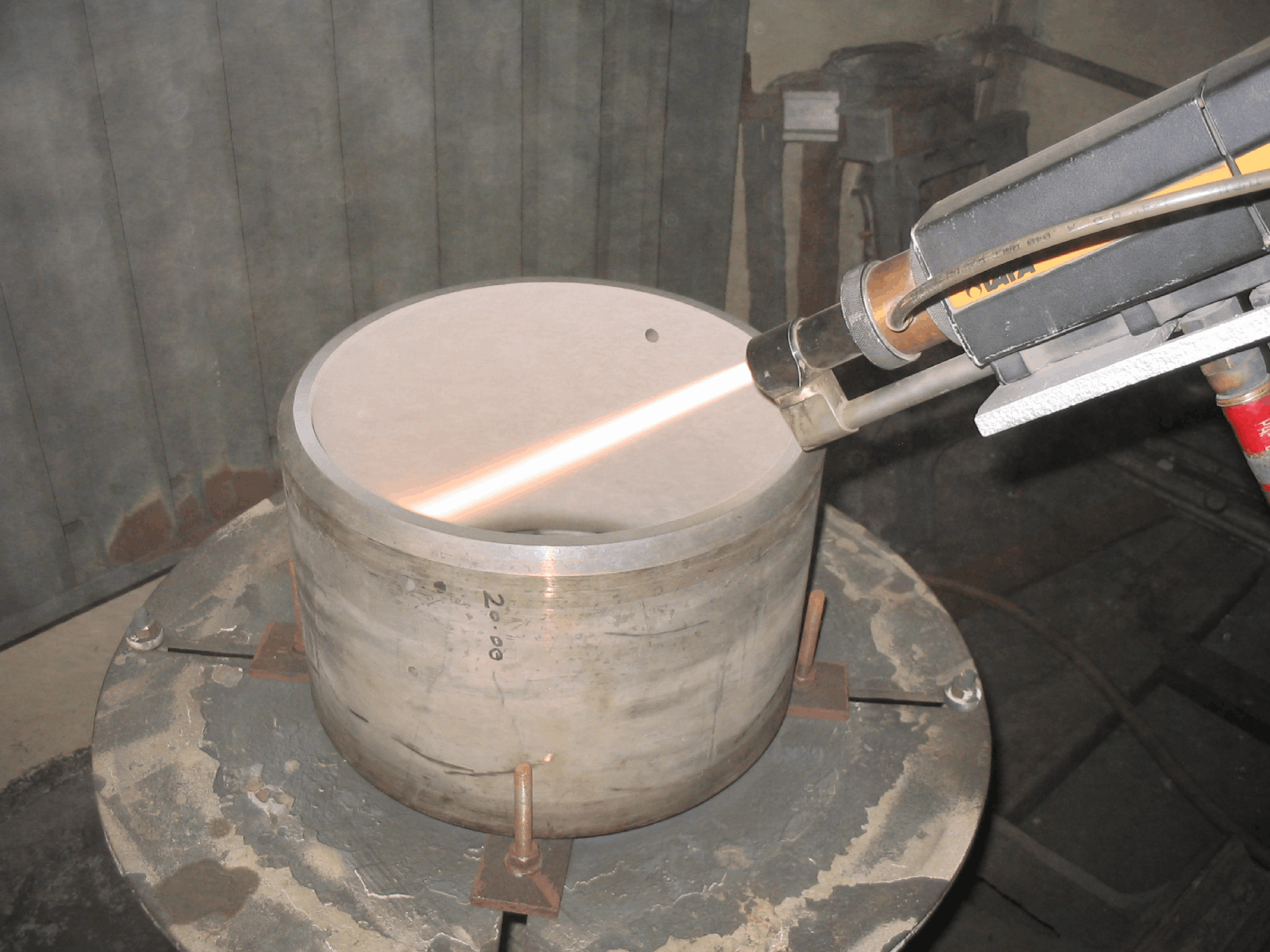
High-Velocity Oxygen Fuel (HVOF) coating has become the go-to process for extending the life of wear parts in steel processing, wire drawing, and pumps — delivering dense, ultra-hard coatings that routinely triple or quintuple component life. But like any engineered process, HVOF performs best when it's matched to the right application.
This guide covers HVOF coating's core advantages, backed by real performance data, alongside the practical factors component geometry, upfront cost, and service temperature — that a good coating partner helps you plan around from day one.
Key Advantages of HVOF Coatings
Density, Hardness, and Bond Strength
- HVOF produces dense, homogeneous coatings with less than 1% porosity (ASTM E-2109)
- Bond strength exceeding 10,000 psi (ASTM C-633) creates an exceptional wear barrier
- WC-Co tungsten carbide coatings reach 1100–1400 HV (70–73 HRC), among the hardest wear surfaces available
Proven ROI in High-Wear Industries
- Industrial users typically see a 3x to 5x increase in service life versus uncoated parts
- Most operations recover the coating investment within 8–12 months through fewer changeouts and shutdowns
- Precision grinding to below 0.4 Ra reduces friction, cutting energy consumption on sliding and rotating components
How much longer do HVOF-coated parts last?
Industrial users typically see a 3x to 5x increase in service life versus uncoated parts, with most operations recovering the coating investment within 8–12 months.
Where HVOF Delivers the Most Value
Steel Processing Rolls and Wire-Drawing Blocks
- Trusted by major steel producers for continuous galvanizing/annealing lines, preventing soft-metal pick-up on rolls
- Handles operating temperatures up to 800°C on roll surfaces while maintaining grip
- Ground to controlled roughness on wire-drawing blocks (250–1400mm) for stable wire grip and consistent finish
Oil & Gas Pump Components
- Protects pump plungers, case/impeller wear rings, and shafts in erosive service
- Diamond-ground post-HVOF to tight dimensional tolerances for reliable sealing and rotation
- Results in longer intervals between repairs and more stable pump performance
Is HVOF suitable for high-precision rotating components?
Yes — HVOF coatings are routinely diamond-ground post-coating to tight dimensional tolerances, making them well-suited to precision rotating parts like pump wear rings.
Factors to Plan Around When Specifying HVOF
Upfront Investment vs. Lifecycle Cost
- HVOF coating carries a higher upfront cost than leaving parts uncoated — but the 3x–5x life extension and 8–12 month payback typically outweigh this over the component's service life
- Building the payback period into a maintenance budget upfront makes the lifecycle economics easy to demonstrate internally
Component Geometry and Service Temperature Range
- HVOF is a line-of-sight spray process, so highly complex internal geometries need to be reviewed with the applicator's engineering team before quoting
- For extreme heat applications above HVOF's practical range, a ceramic thermal barrier coatings system applied via plasma spray coating may be the better-suited process — Plasma Spray Processors offers both under one roof, so the right process is recommended per application rather than forced
Does HVOF cost more than other coating processes?
Upfront cost is generally higher than no coating at all, but when measured against changeout frequency and downtime, most high-hour operations see full payback in under a year.
How to Choose the Right Coating Partner for HVOF
What to Ask About Equipment and QC
- Look for robotic spray cells (for consistency) and an internal QC lab for microstructure/bond-strength verification
- Ask which ASTM methods the vendor tests against, not just pass/fail claims on a data sheet
MOQ and Warranty Benchmarks
- A qualified applicator should accept both single-piece repairs and large OEM production runs (MOQ of 1 piece)
- Standard industry warranty is 6–12 months against workmanship and manufacturing defects
What should I look for in an HVOF coating vendor?
Robotic application for consistency, in-house QC testing, ASTM-traceable specifications, and flexibility to handle both one-off repairs and OEM volumes.
Reader intent: Transactional/Navigational
Conclusion & Next Steps
HVOF coating earns its reputation for density, hardness, and ROI — the key to getting the most from it is matching the process to the right application and partnering with a coating shop that reviews geometry, temperature, and volume upfront.
Have a component in mind? Send Plasma Spray Processors your drawing and operating conditions and get a recommendation on whether HVOF — or an alternative process — is the right fit — Talk to a Coating Engineer.
 +91 9820718722